At six months, babies are sitting up, reaching intentionally, and beginning to understand cause and effect. The best Montessori toys for this age focus on grasping practice, object permanence introduction, textured exploration, and simple cause-and-effect materials. Skip the electronic toys and invest in wooden grasping toys, stacking rings, texture balls, and simple musical instruments.
Six months old. It is a turning point that every parent feels but might not be able to articulate. Your baby is no longer the curled-up newborn who arrived just yesterday. They are sitting up, reaching with intention, grabbing everything within range, and studying objects with a focus that would impress a scientist. Because that is exactly what they are — a scientist running experiments on the physical world.
This is one of the most exciting periods in your child’s development, and the toys you choose right now matter more than you might think. Not because your baby needs expensive educational products, but because the right materials at the right time create a feedback loop of learning that compounds over months and years. The wrong toys — flashy, electronic, overstimulating — actually interrupt that loop.
This guide covers the best Montessori-aligned toys for 6 month olds based on the specific developmental milestones emerging at this age, what the research says about infant learning, and which products actually deliver on their promises. If you are new to the Montessori approach, start with our complete guide to what Montessori toys are for the philosophical foundation.
What is happening developmentally at 6 months
Before choosing toys, you need to understand what your baby’s brain and body are working on right now. According to the CDC developmental milestones and the American Academy of Pediatrics, a typical 6 month old is:
Motor skills emerging:
- Sitting with support and beginning to sit independently
- Reaching for and grasping objects with the whole hand (palmar grasp)
- Transferring objects from one hand to the other
- Beginning to rake small objects with fingers (precursor to pincer grasp)
- Rolling both ways and possibly beginning to scoot or army crawl
- Bearing weight on legs when held in standing position
Cognitive skills emerging:
- Understanding cause and effect at a basic level (I shake this, it makes sound)
- Beginning to understand object permanence (things exist when hidden)
- Showing curiosity about objects that are out of reach
- Studying faces and expressions intently
- Responding to their own name
- Babbling with consonant-vowel combinations (ba-ba, da-da, ma-ma)
Sensory processing:
- Vision is approaching adult clarity for nearby objects
- Color vision is fully developed
- Depth perception is improving rapidly
- Tactile discrimination is becoming more refined
- The mouth remains a primary sensory exploration tool
Every toy recommendation in this guide targets one or more of these specific developmental milestones. This is not about making your baby smarter — it is about giving their brain the exact raw materials it needs to build the neural pathways that are forming right now.
Best grasping and reaching toys for 6 month olds
The palmar grasp — grabbing with the whole fist — is the dominant grasp pattern at 6 months. Over the next several months, this will refine into the pincer grasp (thumb and forefinger), which is essential for everything from eating to writing. The toys you offer now should make grasping satisfying and progressively more challenging.
Top picks for grasping development
| Product | Key Feature | Why It Works | Price Range |
|---|---|---|---|
| Manhattan Toy Winkel Rattle | Interlocking loops | Multiple grasp angles, lightweight | $10-15 |
| Hape Grasping Toy Set | Various wooden shapes | Different sizes train different grips | $15-20 |
| Skwish Classic Rattle | Elastic wooden bars | Compresses and returns to shape | $12-18 |
| Oak wooden ring set | Smooth hardwood rings | Natural weight, safe for mouthing | $8-12 |
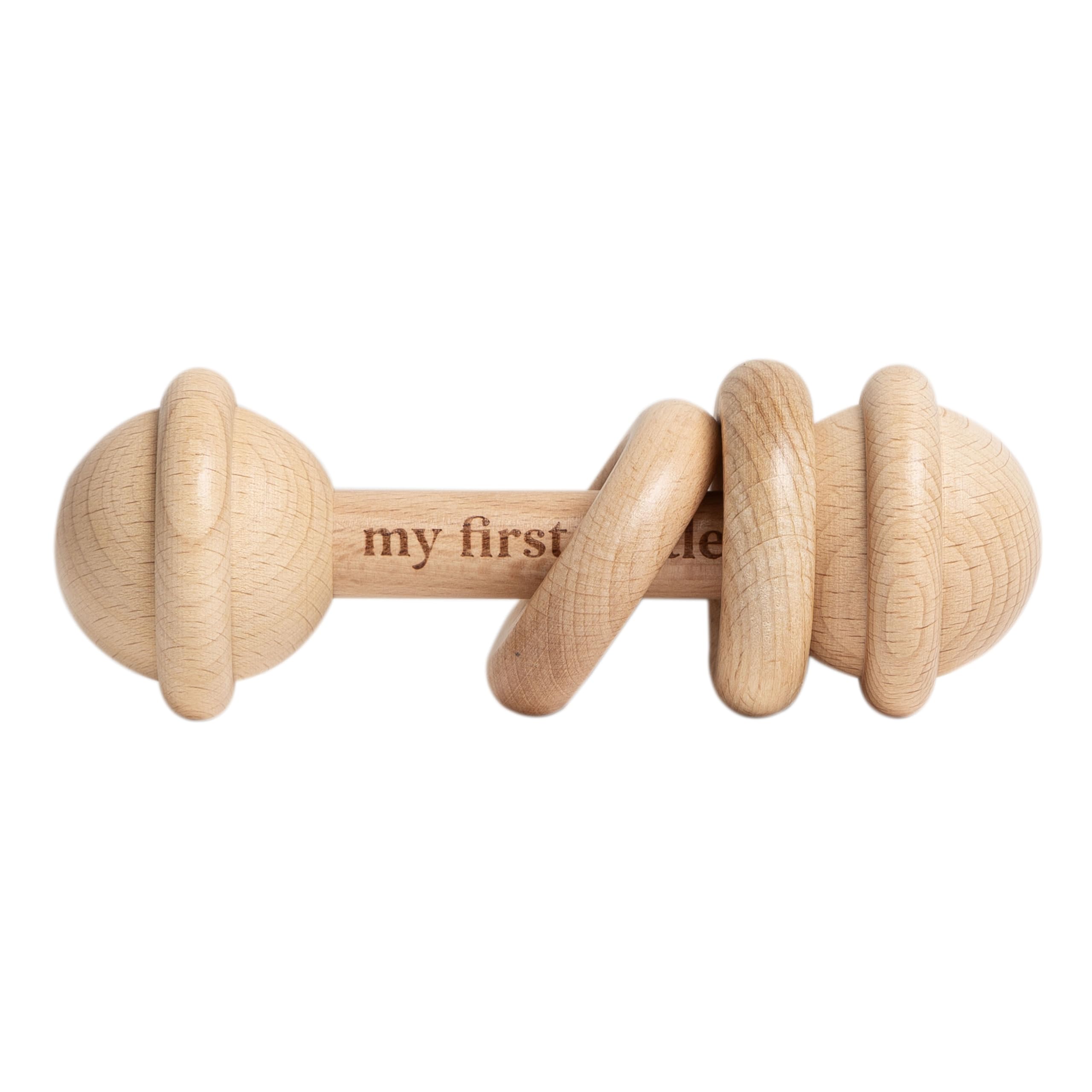
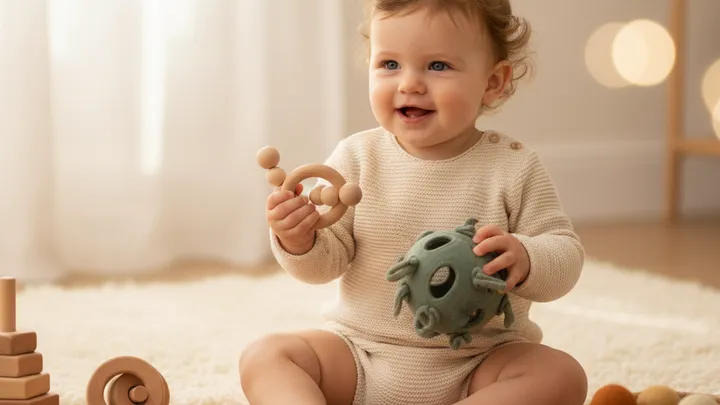
Manhattan Toy Winkel Rattle and Sensory Teether — This remains one of the most recommended first grasping toys for good reason. The interconnected loops can be grabbed from any angle, which means your baby succeeds no matter how they reach for it. The center rattle provides cause-and-effect feedback, and the BPA-free construction is safe for the inevitable mouthing. At around $12, it is one of the best values in infant toys.
Hape Wooden Baby Grasping Toy Set — A set of different wooden shapes that require different hand positions to hold. This variety is what makes it Montessori-aligned: each shape presents a slightly different physical problem to solve, building motor planning and hand strength across multiple grasp patterns.
Parent tip: Place grasping toys slightly to the right and left of your baby during seated play, not just directly in front. Reaching to the side while seated builds the core strength needed for independent sitting and later crawling.
DIY option: Sand a set of hardwood dowel pieces (different diameters) smooth and finish with food-safe beeswax. Different diameters require different grip strengths — thinner pieces are actually harder to hold, which creates a natural progression.
Best stacking and nesting toys
Stacking and nesting toys are Montessori staples because they teach spatial relationships, size comparison, and hand-eye coordination in a self-correcting way. The materials tell the child when they have made an error — a concept Maria Montessori called “control of error” that is central to her method.
At 6 months, your baby is not going to stack rings in order. That comes later. Right now, they are grasping the rings, mouthing them, banging them together, and beginning to pull them off the post. All of this is valuable work.
Montessori Wooden Stacking Rings — Look for a set with a straight post (not rocking) and large rings in natural wood or muted colors. The natural wood version is preferable for Montessori because it isolates the concept of size without the distraction of color. Rainbow versions are fine too, but they introduce two variables at once.
Stacking Nesting Cups — Nesting cups are brilliantly simple. They stack, they nest, they are cups for water play later, they are molds for sand, they demonstrate size relationships. A good set of 8-10 graduated cups will be used for years. At 6 months, your baby will mostly enjoy banging them and putting smaller ones inside bigger ones with your help.
How to present stacking toys the Montessori way
- Start with only 3 rings or cups, not the full set
- Show your baby slowly how to remove one ring from the post
- Let them explore freely — do not correct their order
- When they master 3 pieces, add one more
- The material is self-correcting: a large ring on top of a small one wobbles, teaching the child naturally
Sensory exploration toys for 6 month olds
At six months, the mouth is still the primary tool for exploring textures and materials. This is normal and important — the mouth has more nerve endings per square centimeter than the fingertips, making it the most sensitive tactile instrument your baby has. Do not discourage mouthing; instead, ensure everything within reach is safe to mouth.
For a deeper exploration of sensory development, see our complete guide to Montessori sensory toys.
Texture balls
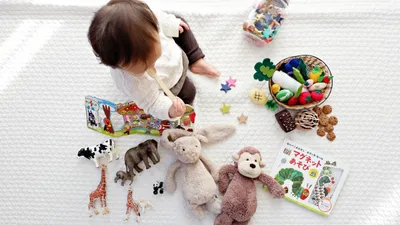
Sensory Ball Set for Babies — A set of textured balls in different sizes and surface patterns. Each ball feels different in the hand and mouth, and each one rolls differently. The unpredictable rolling of textured balls is actually more developmentally stimulating than a smooth ball because the baby must track an irregular path.
Fabric and texture books
Jellycat Soft Cloth Books — Cloth books with crinkle pages, different fabric textures, and simple high-contrast images combine tactile, auditory, and visual stimulation. At 6 months, your baby is not reading — they are feeling, crunching, mouthing, and studying the pages. This is pre-literacy in its earliest form.
Treasure baskets
The Montessori treasure basket is perhaps the single best toy you can make for a 6 month old who is sitting independently. It costs almost nothing and provides richer sensory input than any purchased toy.
How to make a treasure basket:
Fill a low, sturdy basket with 8-10 objects made from different natural materials:
- A large wooden spoon
- A metal whisk or measuring cup
- A piece of natural sponge
- A leather coin purse
- A smooth stone (large enough to not be a choking hazard)
- A natural bristle brush
- A small glass jar with a metal lid (sealed tightly)
- A piece of chain-link (smooth, large links)
- A silk scarf
- A rubber ball
Each object offers different weight, temperature, texture, sound, and visual properties. Your baby will spend 20-30 minutes examining each item, and their concentration during this activity will astonish you. Replace items periodically to maintain novelty.
Parent tip: Sit near the treasure basket but do not interact unless needed for safety. The point is independent exploration. Narrate what your baby is touching if you want to support language development: “That is cold. That is the metal cup. It is heavy.”
Cause-and-effect toys that build understanding
Cause and effect is the foundation of all scientific thinking, and your 6 month old is just beginning to grasp this concept. The earliest cause-and-effect understanding comes from simple actions: I push this, it rolls. I shake this, it makes sound. I drop this, someone picks it up (a favorite game at this age, and yes, it is actually cognitive development).
Simple musical instruments
Hape Musical Instrument Set — A set including a small drum, clacker, and rattle provides three different cause-and-effect experiences. Each instrument requires a different motor action and produces a different sound. This variety matters because it prevents the brain from habituating to a single stimulus.
The Montessori music approach for 6 month olds:
- Offer ONE instrument at a time (isolating the experience)
- Demonstrate the action slowly and clearly
- Let the baby experiment freely
- Play real music (not electronic toy music) in the background during play
- Sing to your baby — your voice is more developmentally valuable than any recorded music
Object permanence introduction
True object permanence understanding does not fully develop until 8-12 months, but the groundwork is being laid right now at 6 months. Simple games prepare the brain:
- Peek-a-boo — the original object permanence game. Your face disappears and reappears. This is genuinely thrilling to a 6 month old because they are learning that you still exist when they cannot see you.
- Partially hidden toy — cover a favorite toy with a cloth, leaving part visible. At 6 months, most babies will pull the cloth away to retrieve it. By 8 months, they will search even when the toy is fully hidden.
- Object Permanence Box — The classic Montessori material. A ball goes into a hole and rolls out a drawer. Most babies are fully ready for this at 8-9 months, but introducing it at 6 months for observation and exploration is fine. They will bat at the ball and mouth the box, which is part of the learning process.
Movement and gross motor toys
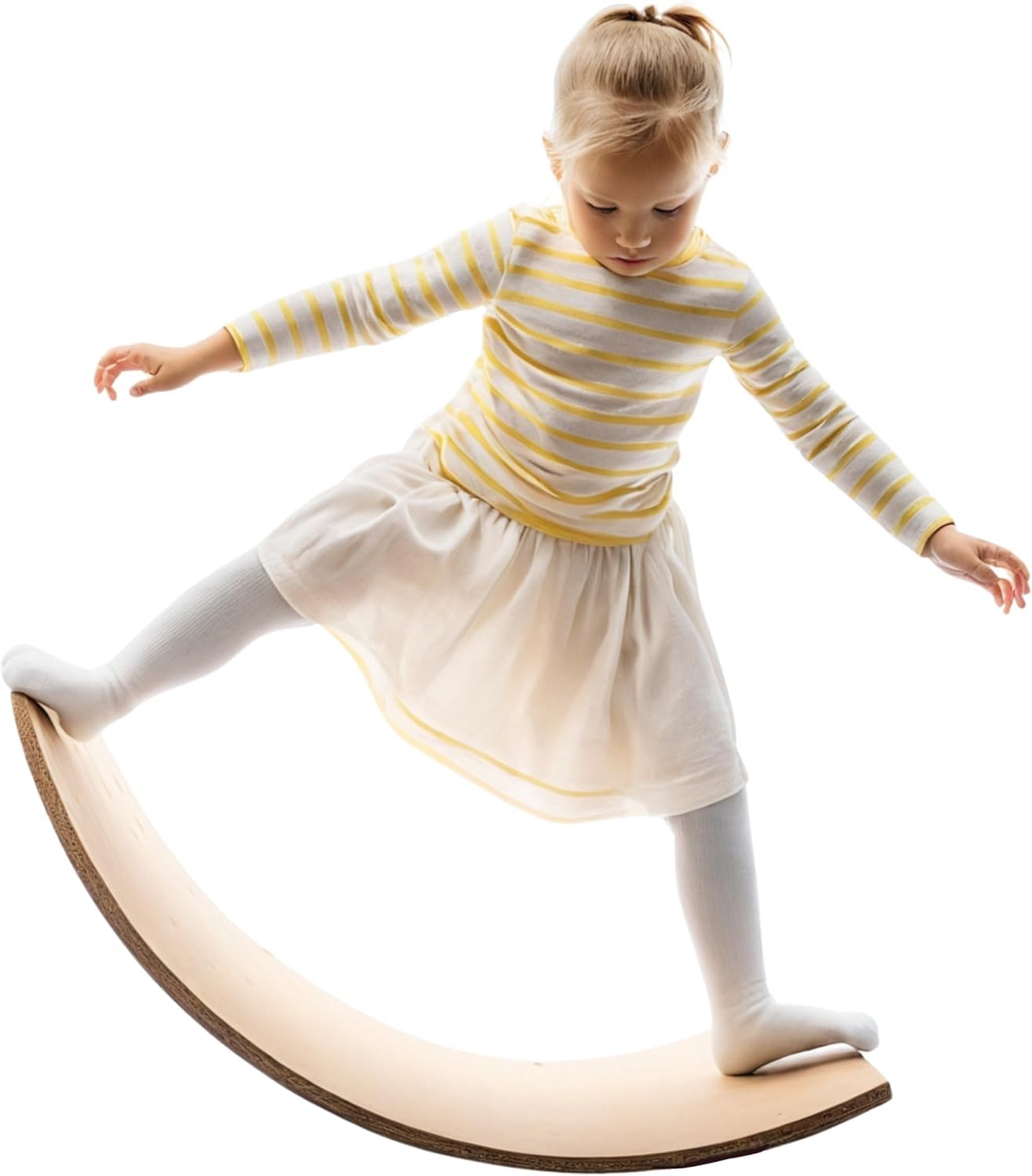
At 6 months, your baby is working hard on the motor skills that lead to crawling, pulling up, and eventually walking. The Montessori approach supports this by providing a prepared environment that motivates movement rather than containing it.
Floor play essentials
A firm, clean play mat on the floor remains the best gross motor environment for a 6 month old. Add these elements to encourage movement:
- Mirrors — place a child-safe mirror at floor level. Babies are fascinated by their own reflection and will reach, scoot, and roll toward it. This also supports self-awareness development.
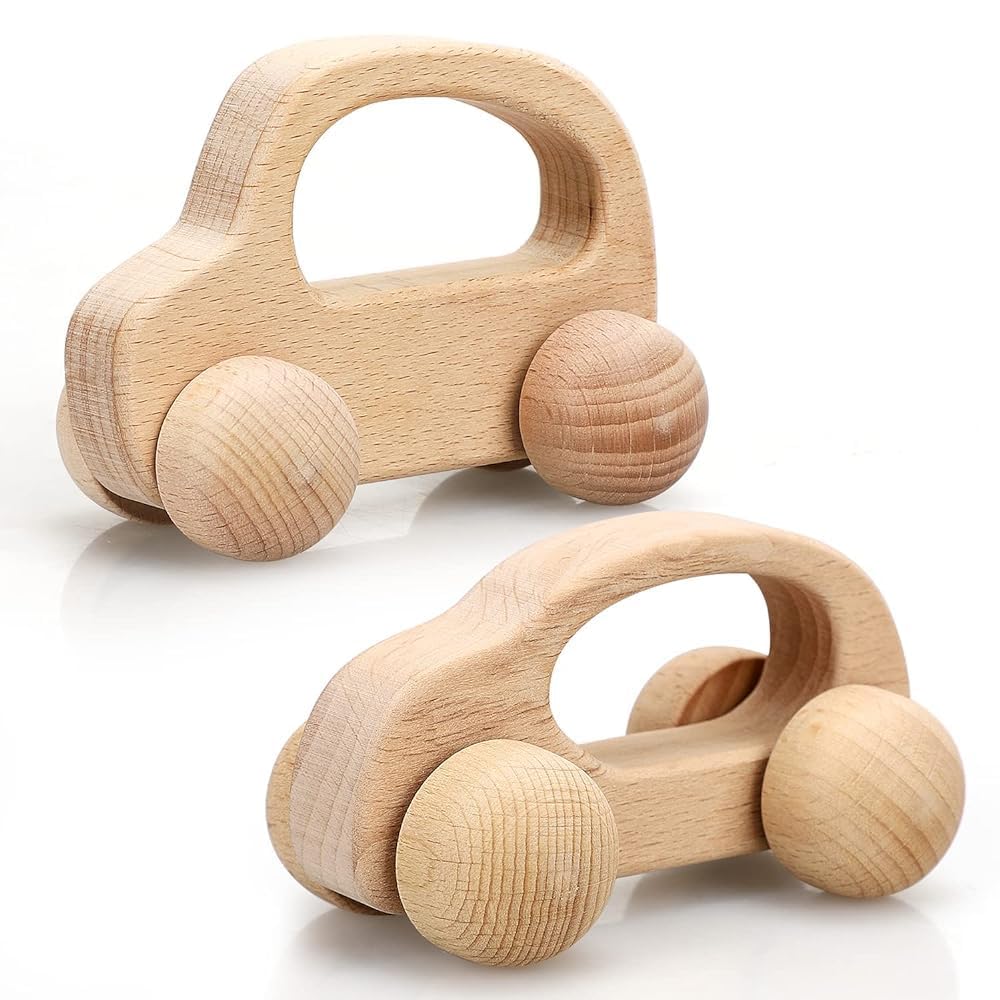
- Rolling toys — balls and cylinders that roll slowly when pushed motivate reaching and scooting. A ball that rolls too fast is frustrating; one that rolls slowly and stops nearby encourages the baby to move toward it.
- Montessori Wooden Ball Tracker — A ball tracker or object tracker with a ball that rolls down a ramp provides visual tracking practice, cause-and-effect learning, and motivation to reach for the ball at the bottom. Position it near the baby during tummy time to encourage reaching and weight shifting.
Why to avoid baby containers
Baby walkers, jumpers, exersaucers, and bumbo seats are popular but problematic from a developmental perspective. The American Academy of Pediatrics specifically recommends against baby walkers due to injury risk and developmental delays. Jumpers and exersaucers place babies in positions they cannot achieve independently and skip important developmental stages.
The Montessori alternative is simple: a safe floor space with interesting things to reach for. This builds the core strength, balance, and motor planning that containers bypass.
Best toys for mealtime skill building
At 6 months, most pediatricians recommend introducing solid foods. This is a Montessori practical life activity from day one. The skills your baby practices with toys — grasping, hand-to-mouth coordination, releasing objects — transfer directly to self-feeding.
Toys that prepare for self-feeding:
- Silicone baby spoons with short handles for self-feeding practice
- Open cups with a small amount of water (yes, at 6 months, with help)
- Pre-spoon GOOtensils — these chewable pre-spoons help babies learn the hand-to-mouth motion needed for spoon feeding. The textured surface also soothes teething gums.
For a comprehensive guide to Montessori practical life activities including mealtime, see our detailed article.
Parent tip: Let your baby play with safe kitchen items during your meal prep — a wooden spoon, a small metal bowl, a silicone spatula. They are learning about the tools of daily life, which is the essence of Montessori practical life education.
How to set up a Montessori play space for a 6 month old
The prepared environment is a core Montessori concept. For a 6 month old, this means:
Floor level organization:
- A firm play mat or rug (not too soft — they need stable ground to practice sitting)
- A low shelf or basket with 4-6 toys visible and accessible
- A child-safe mirror mounted at floor level
- Clear space for rolling and beginning to scoot
What to remove:
- Electronic toys with flashing lights and loud sounds
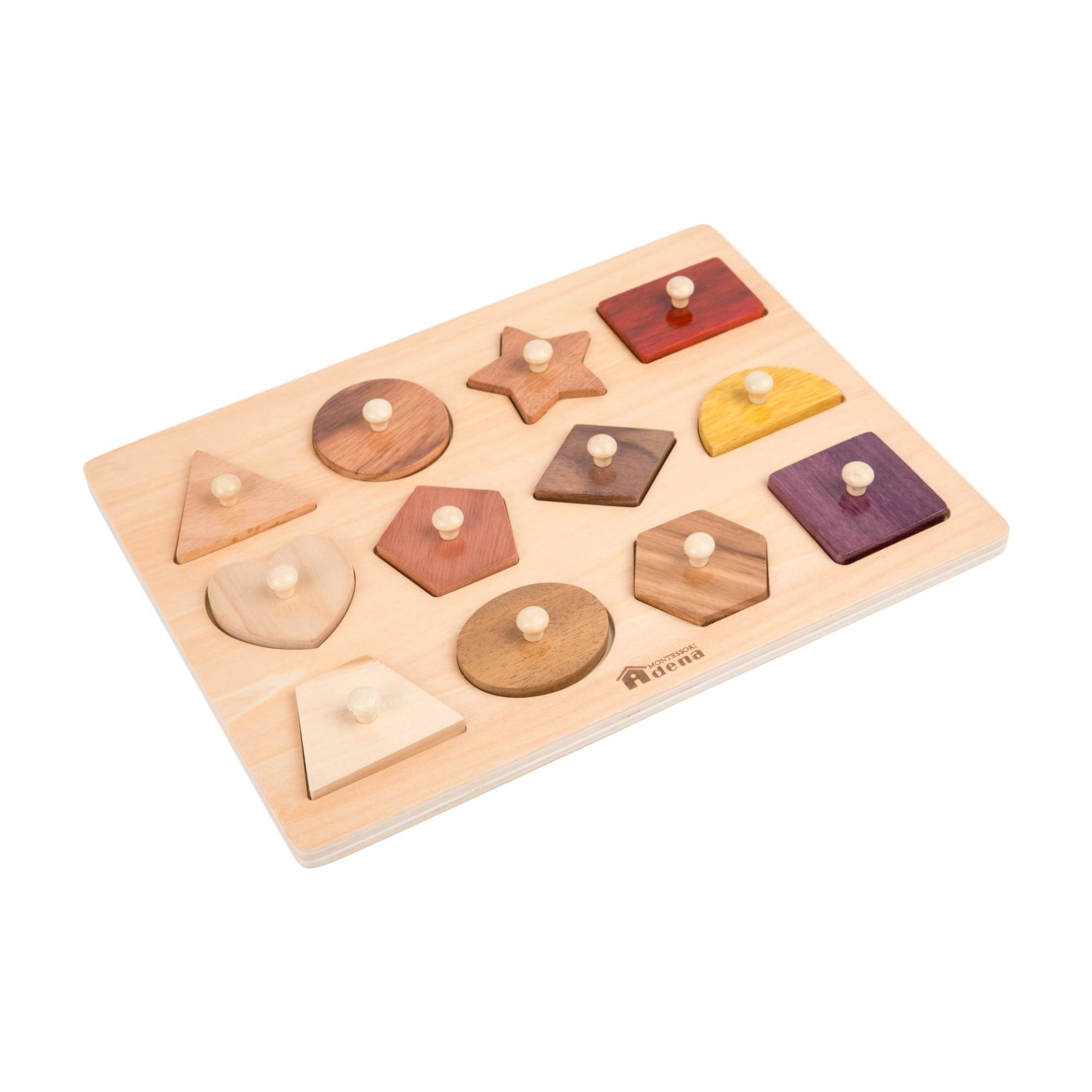
- Toys that are too advanced (puzzles, shape sorters — save for 10-12 months)
- Anything with small parts that could be a choking hazard
- Clutter — too many options reduce focus and engagement
Rotation schedule:
- Keep 4-6 toys available at a time
- Rotate every 1-2 weeks
- Observe which toys your baby engages with deeply and keep those longer
- Retire toys that no longer challenge or interest your baby
For a complete room setup guide, see our article on how to set up a Montessori playroom.
Top 10 recommended toys summary
Here is the complete recommended list for a 6 month old, organized by developmental priority:
| Priority | Toy | Develops | Budget |
|---|---|---|---|
| 1 | Treasure basket (DIY) | All senses, concentration | Free |
| 2 | Manhattan Toy Winkel | Grasping, tracking | $12 |
| 3 | Wooden stacking rings | Hand-eye, size concept | $15 |
| 4 | Texture ball set | Tactile, tracking | $12 |
| 5 | Cloth/crinkle book | Tactile, pre-literacy | $10 |
| 6 | Nesting cups | Spatial, size concept | $8 |
| 7 | Simple wooden rattle | Cause-effect, auditory | $8 |
| 8 | Floor mirror | Self-awareness, movement | $20 |
| 9 | Pre-spoon GOOtensils | Self-feeding, oral motor | $10 |
| 10 | Object permanence box | Permanence, tracking | $20 |
Total budget for all purchased items: approximately $115. The treasure basket is free from household items and arguably the most valuable item on the list.
What to avoid: common mistakes with 6 month old toys
Electronic toys that do the work for the baby. If the toy lights up, plays music, and moves on its own, the baby becomes a passive observer rather than an active learner. In Montessori, the child acts on the material — not the other way around.
Too many toys at once. Research from the journal Infant Behavior and Development shows that fewer toys lead to longer, deeper play sessions. When babies had four toys instead of sixteen, they played with each toy for twice as long and showed more creative interactions.
Toys that are too advanced. Shape sorters, complex puzzles, and building blocks are wonderful — at the right age. Offering them too early creates frustration, not learning. Trust the developmental timeline.
Propping babies in sitting position before they can sit independently. If your baby cannot sit without support, continue with tummy time and floor play. They will sit when their core muscles are ready, and getting there independently builds strength and confidence.
Ignoring the baby’s lead. The most Montessori thing you can do is observe. If your baby is fascinated by a wooden spoon and ignores the $40 educational toy, the spoon is the better toy right now. Follow their interest.
Month-by-month progression from 6 to 12 months
Understanding what comes next helps you plan purchases wisely:
- 6-7 months: Grasping toys, texture exploration, simple cause-and-effect, treasure basket
- 7-8 months: Object permanence games, crawling motivation toys, nesting and stacking
- 8-9 months: Object permanence box, pull-to-stand furniture, first shape sorter (circle only)
- 9-10 months: Ring stacker with intentional order, simple puzzles (single piece), cruising toys
- 10-12 months: Shape sorter, bead maze, push cart for walking, first books with real images
Each stage builds on the previous one. The toys you introduce at 6 months create the neural pathways that make 9-month toys successful. For the complete progression, see our guide to the best Montessori toys for 1 year olds which covers the second half of this journey.
As you select toys for your 6 month old, remember the Montessori mantra: follow the child. The best toy in the world is useless if your baby is not interested. The worst toy in the world is brilliant if your baby is deeply engaged with it. Observe, provide, and trust the developmental process that has been unfolding successfully in human children for hundreds of thousands of years. Your baby knows what they need — your job is to make it available.