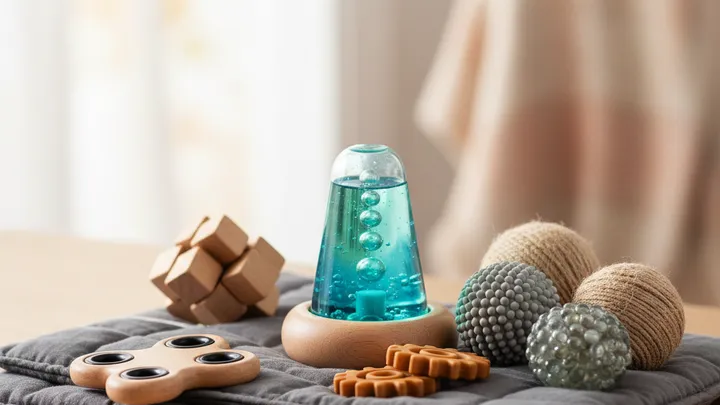
Sensory toys for children with autism should match the individual child sensory profile — some children are sensory-seeking (need more input) while others are sensory-avoiding (need calming, predictable input). The best approach combines calming tools (weighted blankets, noise-canceling headphones), proprioceptive input (chew toys, resistance putty), fidget tools (spinners, tangles), and texture exploration (kinetic sand, water beads). Always observe your child and consult an occupational therapist for personalized recommendations.
When a child with autism covers their ears in a crowded grocery store, rocks back and forth during circle time, chews through the collar of their shirt, or melts down after being touched unexpectedly, they are not misbehaving. They are experiencing a nervous system that processes sensory information differently than neurotypical peers, and they are doing their best to cope.
Sensory processing differences are one of the defining features of autism spectrum disorder. The DSM-5 includes “hyper- or hypo-reactivity to sensory input” as a diagnostic criterion, and research suggests that 60-95% of individuals with autism experience some form of sensory processing difference. This is not a minor feature of autism — for many families, sensory challenges are the most impactful daily reality.
The good news is that sensory tools — carefully selected to match a child’s individual profile — can make a measurable difference in regulation, attention, comfort, and quality of life. This guide covers the evidence behind sensory interventions, the different categories of sensory tools, specific product recommendations by age, and how to build an effective sensory toolkit. It is informed by occupational therapy research, the American Academy of Pediatrics guidelines, and the practical experience of families navigating sensory differences daily.
Important note: This guide is informational, not medical. Every child with autism is unique, and sensory strategies should be developed in partnership with a qualified occupational therapist who can assess your child’s specific sensory profile. What helps one child may overwhelm another.
Understanding sensory processing in autism
What is sensory processing?
Sensory processing is the brain’s ability to receive, organize, and respond to information from the senses. In typical development, this happens automatically — you feel the tag on your shirt, your brain categorizes it as unimportant, and you stop noticing it. For many children with autism, this filtering and categorizing process works differently.
The result can manifest in several ways:
Hypersensitivity (over-responsive): Sensory input feels too intense. Sounds that others barely notice are painfully loud. Clothing tags feel like sandpaper. Bright lights are overwhelming. Food textures trigger gagging. Light touch feels threatening.
Hyposensitivity (under-responsive): Sensory input is not registered adequately. The child may not notice pain, temperature changes, or being touched. They may seek intense sensory experiences — spinning, crashing, chewing, pressing hard — because their nervous system needs more input to register a signal.
Mixed profile: Most common. A child might be hypersensitive to sound but hyposensitive to proprioceptive input, meaning they cover their ears at loud sounds but seek heavy crashing and jumping. This is why a one-size-fits-all approach to sensory toys does not work.
What the research says
The evidence base for sensory interventions in autism has grown substantially in the past decade:
- A systematic review in the American Journal of Occupational Therapy (2015) found that sensory-based interventions showed positive outcomes for social engagement, reducing self-stimulatory behaviors, and improving task completion.
- Research by Dr. Lucy Jane Miller and colleagues at the STAR Institute has demonstrated measurable changes in physiological arousal (heart rate, skin conductance) in response to sensory interventions, confirming that the effects are neurological, not just behavioral.
- A study in the Journal of Autism and Developmental Disorders (2018) found that weighted vests reduced off-task behavior and improved attention in 85% of participants with ASD during classroom activities.
- The American Academy of Pediatrics acknowledges sensory processing differences in autism and supports occupational therapy including sensory integration approaches as part of comprehensive treatment.
Calming sensory toys: for overstimulation and anxiety
Calming tools help children who are overstimulated, anxious, or in the escalation phase before a meltdown. They work by providing deep pressure, reducing sensory input, or offering predictable, rhythmic stimulation.
Weighted items
Deep pressure has a calming effect on the nervous system similar to a firm hug. It activates the parasympathetic nervous system, reducing cortisol and heart rate.
Weighted Blanket for Kids — Choose a blanket that weighs approximately 10% of your child’s body weight. For a 40-pound child, a 4-pound blanket is appropriate. Glass bead filling distributes weight more evenly than plastic pellets. Use during quiet time, reading, homework, or in the sensory corner — not for sleeping in children under 2 or children who cannot remove it independently.
Weighted Lap Pad — A smaller, more portable alternative to a blanket. Weighted lap pads (2-5 pounds) can be used in the classroom, car, or during meals. They provide calming deep pressure without the full-body coverage that some children find restricting.
Evidence note: A 2020 study in Occupational Therapy in Mental Health found that weighted blankets reduced anxiety symptoms by 33% in participants with anxiety-related conditions, though results specific to autism are mixed. Clinical observation consistently reports benefits even where controlled studies show modest effect sizes.
Noise reduction
Sound sensitivity is one of the most common and most disruptive sensory challenges in autism. The world is loud, unpredictable, and there is no volume knob.
Noise-Canceling Headphones for Kids — Over-ear noise-canceling headphones designed for children. Look for adjustable headbands, comfortable ear cushions, and a noise reduction rating (NRR) of at least 22 dB. Some children prefer passive noise-canceling (no electronics) while others benefit from active noise cancellation.
Loop Earplugs for Kids — For children who resist headphones, discreet silicone earplugs that reduce volume without blocking all sound can be life-changing. They allow the child to hear conversation while filtering out painful background noise.
Visual calming tools
Calm-Down Sensory Jar — A sealed jar filled with glitter, oil, or colored beads in liquid that swirl when shaken and slowly settle. The visual rhythm of settling particles is genuinely calming — it provides predictable, slow visual input that counteracts the chaotic visual environment. Many therapists use these as a mindfulness timer: “Watch the glitter settle. When it is still, take a breath.”
DIY option: Fill a clean water bottle with warm water, clear glue, glitter, and food coloring. Seal the cap permanently with hot glue. This costs under $3 and is equally effective as purchased versions.
Compression clothing
Compression Vest for Sensory Input — Compression garments provide constant, even deep pressure across the torso. For children who find weighted blankets too hot or restrictive, a compression vest under clothing provides calming input throughout the day. Consult your OT for appropriate compression level and wearing schedule.
Fidget tools: for focus and self-regulation
Fidget tools serve a specific neurological function: they provide just enough sensory input to keep the nervous system regulated, freeing up cognitive resources for the primary task (listening, learning, conversation). They are not distractions — they are regulators.
Best fidget tools by setting
For the classroom:
| Tool | Sensory Input | Noise Level | Visibility | Best For |
|---|---|---|---|---|
| Fidget cube | Tactile, clicking | Low-medium | Medium | Desk work |
| Tangle Jr. | Tactile, movement | Silent | Medium | Listening |
| Stress ball | Proprioceptive | Silent | Low | Anxiety |
| Textured pencil grip | Tactile | Silent | Very low | Writing tasks |
| Resistance band on chair | Proprioceptive, movement | Silent | Very low | Sitting |
Tangle Jr. Fidget Toy — The Tangle is a series of interconnected curved sections that twist and rotate smoothly. It is silent, fits in one hand, and provides the kind of rhythmic, repetitive tactile input that many children with autism find regulating. It has been recommended by occupational therapists for decades and remains one of the most effective classroom fidgets.
Fidget Cube — Six sides, each with a different fidget mechanism: clicking, spinning, flipping, rolling, sliding, and a smooth worry stone. This variety means the child can match the input to their current need. The clicking side can be loud — some children prefer the silent sides for classroom use.
For home:
Kinetic Sand — This moldable sand provides extraordinary tactile input — it feels like wet sand but is dry and does not stick to hands. For sensory-seeking children, the act of squeezing, molding, and cutting kinetic sand provides proprioceptive and tactile input simultaneously. It is also inherently calming and can be used in a sensory corner.
Pop-It Fidget — The satisfying popping sensation provides both tactile and auditory feedback. Pop-Its are particularly effective for children who seek repetitive sensory patterns. Choose silicone versions in calming colors rather than the bright, complex shapes that can become more toy than tool.
Proprioceptive and vestibular toys: for body awareness
Proprioceptive input (deep pressure, heavy work, resistance) and vestibular input (movement, balance, spinning) are the two sensory systems most commonly affected in autism. Many children are under-responsive in these systems and actively seek intense input.
Proprioceptive tools
Therapy Putty Set — Resistance putty comes in graduated firmness levels (soft to extra-firm). Pulling, squeezing, and tearing putty provides intense proprioceptive input to the hands and arms. Many OTs use putty as a warm-up before fine motor tasks like writing. The extra-firm levels provide significant resistance that meets high proprioceptive needs.
Chew Necklace - ARK Therapeutic — For children who chew on shirts, pencils, fingers, or other non-food items, medical-grade silicone chew jewelry provides a safe, socially acceptable outlet. ARK Therapeutic offers different toughness levels: soft (mild chewers), standard (moderate), and XT (aggressive chewers). The necklace form keeps the tool accessible throughout the day.
Body Sock / Resistance Tunnel — A stretchy fabric enclosure that the child climbs inside. Every movement meets resistance, providing intense proprioceptive input across the entire body. Many children with autism find body socks profoundly calming. They also develop body awareness and motor planning.
Vestibular tools
Spinning Board / Sit-n-Spin — Spinning activates the vestibular system, which plays a major role in arousal regulation. Children who seek spinning often have an under-responsive vestibular system. A spinning board provides controlled vestibular input in a safe setting. Note: some children become nauseated from spinning — start slowly and observe.
Therapy Ball / Yoga Ball — Sitting on a therapy ball provides constant vestibular input (the child must constantly adjust balance). Some classrooms allow children with autism to use therapy ball chairs. At home, bouncing on a therapy ball is one of the most effective quick-regulation activities available.
For more on movement and balance, see our guide to gross motor toys for toddlers.
Texture and tactile toys: for sensory exploration
Tactile differences are extremely common in autism. Some children avoid textures intensely (will not touch sand, paint, slime, or certain foods). Others seek texture constantly, touching everything and everyone.
For sensory-seeking children
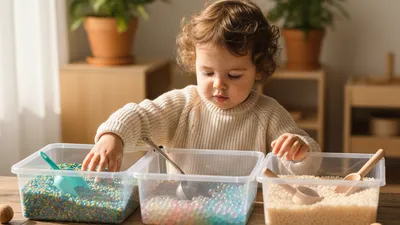
Water Beads Sensory Kit — Hydrated water beads provide a unique tactile experience — smooth, cool, slightly slippery, and satisfying to squeeze. They can be used in a sensory bin with scoops, funnels, and containers. Supervision is required as water beads are a choking hazard and should not be used with children who mouth objects.
Sensory Brush Set — Different brush textures (soft, firm, bristle, rubber) provide varied tactile input. The Wilbarger brushing protocol, developed by occupational therapist Patricia Wilbarger, uses specific brushing techniques to reduce tactile defensiveness. This should be taught by an OT before implementing at home.
For sensory-avoiding children
For children who withdraw from touch, the approach is gradual exposure with the child in control:
- Start with textures the child accepts (often smooth, firm, dry)
- Introduce new textures in a playful, pressure-free context
- Let the child control the interaction (they touch the material, the material does not touch them)
- Pair new textures with preferred activities
Texture progression for avoiding children:
- Smooth wood → smooth plastic → smooth metal (temperature variation)
- Dry fabric → dry rice → dry sand
- Slightly damp sponge → wet cotton → finger paint
- Never force. Never rush. Each step may take days or weeks.
Sensory toys by age group
Ages 2-4: Foundation
At this age, sensory processing differences are often first identified. Tools should be safe for mouthing, simple to use, and durable.
Essential toolkit:
- Chew teether or necklace (oral input)
- Weighted stuffed animal (deep pressure)
- Texture ball set (tactile exploration)
- Mini trampoline with handle (vestibular and proprioceptive)
- Calm-down jar (visual regulation)
Ages 4-7: School readiness
Entering school introduces new sensory challenges: fluorescent lights, echoing cafeterias, crowded hallways, sitting still for extended periods.
Essential toolkit:
- Noise-canceling headphones or earplugs
- Desk fidget (tangle, fidget cube, or textured strip adhered to desk underside)
- Chew necklace (worn under shirt)
- Resistance band on chair legs (proprioceptive input while sitting)
- Portable calm-down kit (weighted lap pad, smooth stone, breathing card)
Ages 7-12: Self-regulation
Older children can learn to identify their own sensory needs and select tools independently.
Essential toolkit:
- Discreet fidget tools they help choose
- Therapy putty in a small container
- Weighted blanket for homework and reading
- Exercise options (trampoline, climbing wall, therapy ball)
- Sensory break timer (visual timer showing when the next movement break occurs)
Ages 12+: Social awareness
Adolescents with autism are often acutely aware of social perception. Sensory tools need to be effective AND discreet.
Essential toolkit:
- Smooth worry stone in pocket
- Discreet spinner ring (jewelry that spins)
- Earbuds with noise reduction
- Compression undershirt
- Exercise and physical activity as primary regulation strategy
Building a sensory corner at home
A sensory corner is a dedicated space in your home designed for regulation. It is not a time-out spot — it is a self-care station that the child accesses voluntarily when they feel overwhelmed.
Setup essentials
Space: A corner of a bedroom or living room, approximately 4x4 feet minimum. Some families use a small pop-up tent or canopy to create an enclosed, den-like feeling.
Lighting: Dimmable. Avoid overhead fluorescent lighting. A string of warm LED lights or a small lamp with a warm bulb creates a calming atmosphere.
Seating: A bean bag, large floor cushion, or crash pad. Something the child can sink into that provides proprioceptive input.
Calming tools:
- Weighted blanket or lap pad
- 2-3 preferred fidget tools
- Noise-canceling headphones
- Calm-down jar or lava lamp
- Favorite stuffed animal or comfort item
Boundaries: Use a small rug or tape on the floor to define the space. Visual boundaries help the child understand that this is a specific, purposeful space.
Rules for the sensory corner
- It is always available — never restricted as a punishment
- The child decides when to use it and when to leave
- No screens inside the sensory corner (screens are stimulating, not calming)
- Siblings may use it too, one at a time
- Items inside the corner stay inside the corner (prevents tools getting lost throughout the house)
Parent tip: Model using the sensory corner yourself. Say “I am feeling overwhelmed, I am going to sit in the quiet corner for a few minutes.” This normalizes self-regulation and shows your child that needing a break is not a weakness — it is a skill.
Working with occupational therapy
Sensory toys are tools, not treatments. They are most effective when selected and used as part of a comprehensive sensory strategy developed with a qualified occupational therapist.
What an OT provides that this guide cannot:
- Formal sensory profile assessment (using standardized tools like the Sensory Profile 2 or Sensory Processing Measure)
- Individualized sensory diet — a scheduled plan of sensory activities throughout the day
- Training on specific techniques (therapeutic brushing, joint compression, vestibular protocols)
- Monitoring and adjustment as the child grows and sensory needs change
- Collaboration with school to implement sensory accommodations in the IEP/504 plan
How to find an OT specializing in sensory processing:
- Ask your pediatrician for a referral
- Search the AOTA (American Occupational Therapy Association) directory
- Look for OTs with training in Ayres Sensory Integration (ASI) — this is the gold-standard training for sensory processing intervention
- Many OTs offer telehealth consultations for initial assessments and parent coaching
What the evidence does and does not support
Honesty matters, especially when parents are making decisions for vulnerable children. Here is what the current evidence actually says:
Strong evidence:
- Sensory processing differences are a real, measurable feature of autism (not behavioral or imagined)
- Occupational therapy including sensory approaches improves functional outcomes
- Deep pressure interventions reduce physiological stress markers
- Fidget tools improve on-task behavior in many (not all) children with attention challenges
Moderate evidence:
- Weighted blankets improve subjective comfort and may improve sleep
- Sensory diets (scheduled sensory activities) improve self-regulation
- Specific sensory tools reduce the frequency and intensity of meltdowns
Limited or mixed evidence:
- Sensory integration therapy as a standalone intervention for core autism symptoms
- Specific brand claims about proprietary sensory toys
- Long-term outcomes from sensory interventions (most studies are short-term)
The practical takeaway: sensory tools are genuinely helpful for many children with autism, but they are not a cure, they are not a substitute for professional therapy, and they must be individualized. What transforms one child’s daily experience may have no effect on another.
Moving forward with compassion and evidence
If you are the parent of a child with autism, you already know more about sensory processing than most people learn in a lifetime. You know which sounds trigger meltdowns. You know which textures are acceptable and which are intolerable. You know the signs that your child is escalating and the strategies that sometimes help.
Trust that knowledge. It is the foundation on which professional guidance builds. An occupational therapist gives you the framework and techniques, but you give the irreplaceable data — you know your child.
The sensory tools in this guide are starting points. Buy one or two that match your child’s most pressing needs, observe the response, adjust, and build from there. The goal is not to fill a room with sensory products. The goal is to give your child the specific tools their nervous system needs to navigate a world that was not designed for the way they process it.
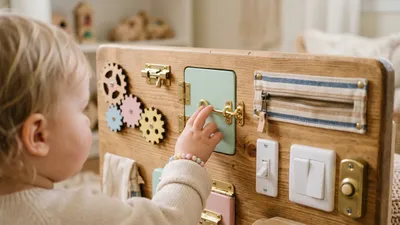
For more on sensory development in all children, see our guide to the best Montessori sensory toys. For activity ideas that support tactile exploration, see our busy boards guide which includes many sensory-friendly options.
Every child deserves to feel regulated, comfortable, and capable. The right sensory tools, chosen with care and guided by evidence, move the world a little closer to that reality.